September 15, 2026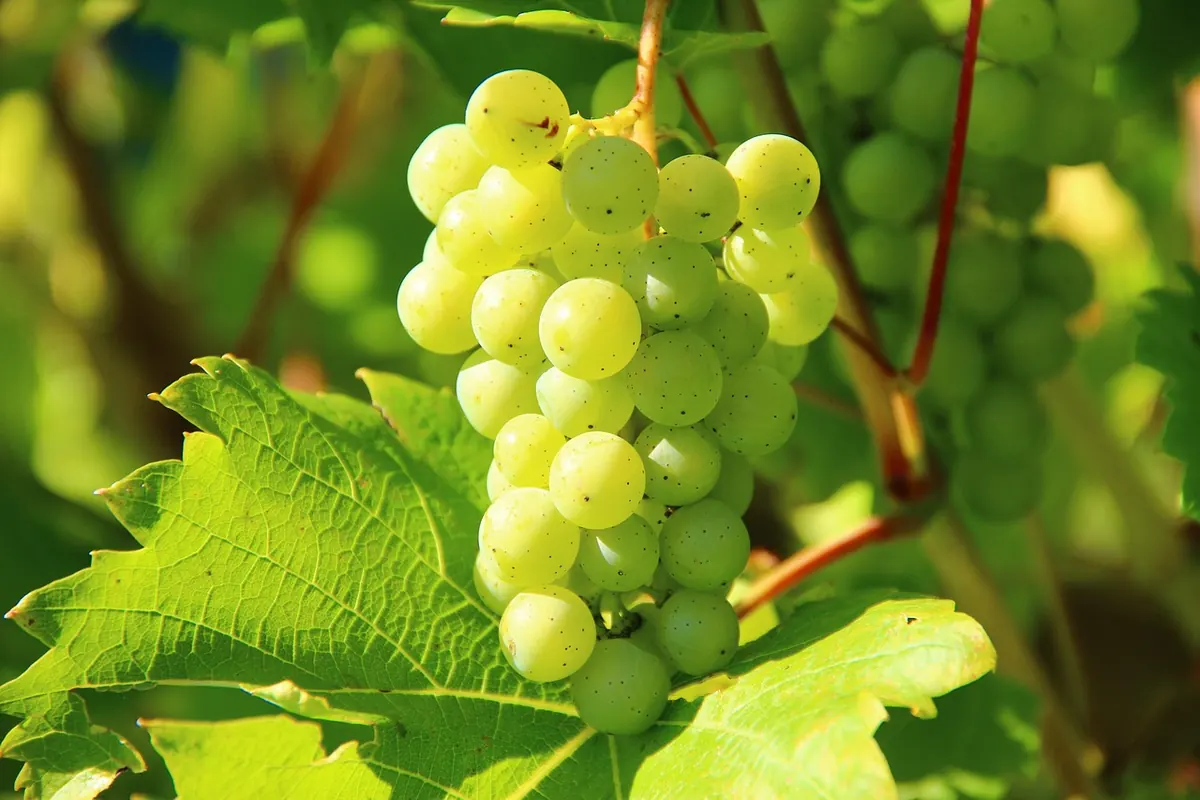
Winter pruning is the moment a grape vine stops being a leafy tangle and becomes a clear set of choices. The Guyot method gives you a simple framework: one or two long fruiting canes, plus short renewal spurs to build next year's vine. It suits UK backyard vines because it balances fruit and growth without needing a complicated permanent spur system.
Why grape vines need winter pruning
Grapes fruit on new shoots that grow from last year's wood. Leave a vine unpruned and those shoots multiply, the centre becomes congested, and the crop shrinks into small, poorly ripened bunches. Winter is the best time to see the structure because the leaves have gone and the sap is down. You can decide which canes to keep, which to remove, and where next year's fruit will come from.
Guyot pruning replaces the fruiting wood each year. Instead of relying on old spurs that gradually become crowded, you cut back to a small renewal spur near the trunk. That spur produces fresh canes, and you choose one or two of those to carry the following crop. It is a rolling system, not a fixed one.
When to prune in the UK
Prune during dormancy, after the leaves have fallen and before the buds begin to swell. In most UK gardens that means late December through February. Late January to early February is often a useful window: the worst of the winter cold has passed, but growth has not started. If a hard frost is forecast, wait. Frozen wood is brittle and cuts shatter rather than slice.
You may see sap bleeding from cuts made late in the season. It looks alarming but is rarely fatal on a healthy vine. Still, earlier dormant pruning avoids the problem. Avoid pruning in soaking wet weather if you can, as wet wounds are more vulnerable to disease. Choose a dry, mild day and work steadily.
Single or double Guyot?
Both systems start with a permanent trunk and a head, usually near the top wire of your support. The difference is how many fruiting canes you keep.
Single Guyot
One long fruiting cane and one renewal spur. This suits less vigorous vines, small gardens, and sites where you want to keep the vine compact. It is also easier to manage if your growing season is short or the vine is young.
Double Guyot
Two long fruiting canes, one on each side of the head, plus two renewal spurs. This suits vigorous vines and gives a larger crop, provided the vine has the strength and space to fill both canes. In a cool UK summer, a double Guyot on a weak vine can spread the plant too thin. Match the system to the vine's vigour, not to ambition.
Tools and clean cuts
Good pruning is mostly about clean, decisive cuts. Blunt tools crush the wood and leave a ragged wound that heals slowly.
- Sharp bypass secateurs for canes up to about the thickness of a pencil.
- Loppers or a small pruning saw for older, thicker wood.
- Gloves, ties, and a roll of soft garden twine.
- A bucket for cuttings, which can be composted or shredded.
When shortening a cane, cut about a centimetre above a plump bud, sloping away from it so water runs off. Do not leave a long stub; it dies back and invites disease. When removing a whole cane from the head, cut close to the trunk but do not gouge into it. If you are unsure, leave a very short collar and tidy it later.
Step-by-step: single Guyot
- Untie the vine from its wires and spread the canes so you can see what you have.
- Choose one strong, well-ripened cane growing near the head. It should be roughly pencil-thick, with buds spaced evenly along its length. Cut it back to 8 to 12 buds. This is your fruiting cane.
- Choose another healthy cane close to the head for the renewal spur. Cut it back to 2 buds. This is the spur that will produce next year's replacement canes.
- Remove every other cane back to the head or trunk. Work from the outside in so you do not cut a cane you later need.
- Tie the long fruiting cane horizontally along the first wire. Keep the renewal spur vertical or angled slightly outward.
Step-by-step: double Guyot
- Clear the vine as above and identify the head.
- Choose two strong canes, one on each side of the head. Cut each to 8 to 12 buds.
- Choose two renewal spurs, one below or near each fruiting cane. Cut each to 2 buds.
- Remove all remaining canes cleanly.
- Tie one fruiting cane to the left along the wire and one to the right. Tie the spurs so they have room to grow without shading.
Selecting canes and renewal spurs
The quality of your selection decides the crop. Look for canes that are firm, well-ripened, and coloured like mature wood rather than soft green growth. Buds should be plump and evenly spaced. Avoid canes that are very thin, very thick, or have long bare sections between buds. A cane with a few good buds is better than a long one with weak buds at the tip.
Renewal spurs are the future of the vine. Choose them low on the head, close to the trunk, and facing outward. Two buds is usually enough. If the vine has no suitable spur, keep a short cane of two buds from the best available wood. Next winter, one shoot from that spur can become your new fruiting cane, and another can become the next renewal spur.
Prune for the vine you want next year, not for the vine you have now. The long canes carry this season's fruit; the short spurs carry the seasons after.
Aftercare and next winter
Once the vine is tied in, tidy the ground around it and mulch with well-rotted compost, keeping the material away from the trunk. In spring, water newly planted or young vines in dry spells. As shoots grow, tuck them between the wires or tie them loosely so the canopy stays open. Summer pruning will follow later, but winter Guyot is the framework that makes it manageable.
If your vine is newly planted, do not rush into Guyot. Spend the first year or two building a strong trunk and a head at the height of your top wire. Once that structure is established, winter pruning becomes a repeatable routine. In the following winters, cut out the old fruiting canes, choose fresh ones from the renewal spurs, and tie them down again.
Work slowly, keep your tools sharp, and step back often to check the shape. A well-pruned vine looks sparse in winter. That is exactly the point: space for light, air, and next year's grapes.
Photo: Optimusius1 / Pixabay